Tuesday, 29 September 2009

in front of the Main Temple


in front of the Main Temple
Originally uploaded by Leone Fabre.


The Main Hindu Temple at Grand Bassin in Mauritius....

it was raining so heavy, but I still wanted to take the photo ... John held two umbrella's over me so I could just capture this one.

August 2009

Sunday, 27 September 2009

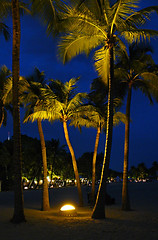
Sentosa at night .....


Palm Tree's at night......
Originally uploaded by Leone Fabre.

most visitors to Sentosa get to experience it during the day ...... but it certainly is worth a visit at night!

for example:

If you love the day luge, you will find irresistible with the night ones! Sentosa Luge & Skyride now operates from 10am in the morning all the way till late at night.

Sentosa Nature Discovery: Night Workshops including "Frogs and Toads" or the "Fireflies and Friends".

Sentosa Island Dining. So many wonderful restaurants to sample!!

Sentosa Garden at Night.

"Song of the Sea" is a must see experience!

Sentosa 4D Magix ...... full on Movie Magic!

Jazz by The Beach ...... an awesome night sitting by the beach listening to music.

or just have a wander to enjoy the sights and sounds and watch everyone enjoying Sentosa at night too....

Saturday, 26 September 2009

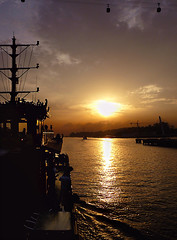
sunset on Singapore Harbour.......


sunset on Singapore Harbour.......
Originally uploaded by Leone Fabre.

For those interested in 'something different' to do when you have visitors coming to Singapore ..... maybe take them on the Imperial Cheng Ho Dinner (or afternoon tea) cruise.

http://www.watertours.com.sg/

Watertours Pte Ltd was established in 1977 to operate Harbour Cruises on Chinese junks, which are authentic replicas of an Imperial Cheng Ho Vessel from China.

Thursday, 24 September 2009

The Blue and Gold Macaw at Jurong Bird Park in Singapore.


The Blue and Gold Macaw at Jurong Bird Park in Singapore.
Originally uploaded by Leone Fabre.


Macaws, like other parrots, as well as toucans and woodpeckers, are zygodactyl, having their first and fourth toe pointing backwards.

Macaws are small to large, often colourful New World parrots. Of the many different Psittacidae (true parrots) genera, six are classifed as macaws: Ara, Anodorhynchus, Cyanopsitta, Primolius, Orthopsittaca, and Diopsittaca. Previously, the members of the genus Primolius were placed in Propyrrhura, but the former is correct as per ICZN rules[1]. Macaws are native to Mexico, Central America, South America, and formerly the Caribbean. Most species are associated with forest, especially rainforest, but others prefer woodland or savanna-like habitats.

There is no unifying characteristic which differentiates macaws from all other types of parrots. All species have a long tail, but so do conures. The bare facial patch surrounding the eye and extending to the beak is unique to macaws, but it is reduced in some species, and limited to a yellow patch around the eyes and a second patch near the base of the beak in the members of the genus Anodorhynchus.

Some of the macaw species are popularly known for their impressive size. The largest parrot in length and wingspan is the Hyacinth Macaw. The heaviest macaw is the Buffon's, although the heaviest parrot is the flightless Kakapo. While still relatively large parrots, the macaws of the genera Cyanopsitta, Orthopsittaca and Primolius are significantly smaller than the members of Anodorhynchus and Ara. The smallest member of the family, the Red-shouldered Macaw, is no larger than some parakeets of the genus Aratinga.

Wednesday, 23 September 2009

don't sing in your swimming costume

I have often thought about the etiquette of tourists traveling overseas and wonder why some people don't do their homework and read about the local culture or the laws of the country they are traveling to BEFORE leaving home!

I do not know the laws, rules, regulations, customs and culture of many countries, but I do know to read a little of the culture of where I am traveling to so as not to offend.

For example, I often see young women dressed inappropriately while wandering around the Arab Quarters for instance.... I am not conservative nor am I a prude...... but surely visitors would know to cover their shoulders at least when in this area.

As seen in this image below:


But it was brought to my attention a day or so ago when I came across an article titled:

Singing whilst wearing a swimming costume and carrying an ice cream cone in a back pocket on a Sunday are just two foreign laws of which British holidaymakers should be wary, according to a new guide!!

Other prohibitions they cite in the article included laws against unmarried women parachuting on a Sunday and flushing the lavatory after 10pm, according to the travellers' compendium.

It comes after a string of cases involving holidaymakers getting arrested abroad. In May an Australian mother was arrested for stealing a beer coaster from a nightclub in Thailand. (It was more like a large place mat!)

Last year two Britons were convicted of indecency after being caught having sex on a beach in Dubai. They were initially given three-month jail terms but these were suspended on appeal.
In April visitors to Malaysia were warned they face up to a year in jail if they behaved too affectionately in public after a local couple were arrested for holding hands and kissing.

Sunshine.co.uk, an online travel agent, said it had seen an "influx of inquiries" from worried holidaymakers about the rules and regulations of their chosen destination.

A spokeswoman said: "Aside from the more serious rules, such as showing affection to a non-marital partner in public or walking around in swimwear in Dubai, there are many outdated rules around the world that people should be aware of."

Here is the list of examples of which they say holidaymakers should be aware:

In Milan it is a legal requirement to smile at all times, except during funerals or hospital visits.

In Massachusetts, taxi drivers are prohibited from making love in the front seat of the car during their shifts.

In Denmark, people are legally obliged to honk the horn and check for small children underneath the car.

In Thailand, it is illegal for anyone to leave a building without wearing their pants.

In Michigan, anyone planning on bathing in public must have their swim suit inspected by a police officer.

In Florida, any unmarried woman who parachutes on a Sunday could be jailed. Singing while wearing a swimming costume is also prohibited.

In Portugal it is unlawful to urinate in the sea.

In Hong Kong the wife of a husband who commits adultery is legally entitled to kill the mistress in any manner desired, and the husband with just her bare hands. uh oh!

In Switzerland flushing the lavatory after 10pm is illegal.

In Canada if you are arrested and then released from prison, it is a legal requirement that the felon is given a handgun with bullets and a horse, so they can ride safely out of the town.

Last month the Foreign Office (UK) warned holidaymakers to check out local laws and customs before traveling abroad. Read article here.

I checked the Australian website for travelers and came across the following:

When you are in Singapore, be aware that local laws and penalties, including ones that appear harsh by Australian standards, do apply to you. If you are arrested or jailed, the Australian Government will do what it can to help you but we can't get you out of trouble or out of jail.

Information on what Australian consular officers can and cannot do to help Australians in trouble overseas is available from the Consular Services Charter.

Penalties for drug offences are severe and include the death penalty. Serious crimes, such as murder, abduction and weapons offences, may also attract the death penalty.

Corporal punishment (including the rattan cane) may be imposed for crimes including drug offences, rape, rioting, extortion and vandalism.

Homosexual acts, including kissing between men, are illegal in Singapore and penalties include imprisonment.

Shoplifting and theft are considered serious offences in Singapore. Australians visiting Singapore and transiting Changi airport have received jail sentences for such offences. Shopping centres, including at Changi airport, have sophisticated surveillance equipment to prevent shoplifting.

a Singaporean wrote the following on a local forum:

"Singapore has a reputation for its rules and regulations. There are posters displayed prominently around the place telling people what to do and what not to do.
There is a need for some, I believe, so that it is clear what is forbidden, such as not eating or smoking on the trains.

However, the Singapore government have taken this one step further and have issued posters on matters that any person with a decent upbringing would not need reminding about.
I don't really need to be told how to use a public toilet, that I must keep it clean and flush after use or that I should not urinate in lifts.

If you are someone that likes to break the rules then watch out because there are stiff fines involved for doing so. Just act like a decent person showing respect to other people and public places and you will not have a problem."

and another wrote this one:

"As a Singaporean, I am used to living in a clean, safe and orderly society where rules and regulations prevail. It is because of the existence of these rules and their enforcement by incorruptible officials that Singapore is among the safest cities in the world.
The tourist in Singapore does not have to worry about pickpockets that roam the streets of Rome and Barcelona, the hell drivers in Shanghai, and violent crimes in big cities in the US. It is perfectly safe to take the subway and to walk in the streets at night. "

Standards of behaviour in Singapore are (to some people) generally conservative. You should take care not to offend. If in doubt, seek local advice.

eg: Public displays of affection may cause offence.

I have had people ask me "what is it like to live in such a controlled country" .... I never think of it like that .... I am very lucky to be able to live here and experience so many cultures living together harmoniously. I certainly would not have that if I stayed in Australia!

We all know the rules .... so why go against them?

The laws here are for the benefit of us all. We can feel safe and we can walk around the streets at night without fear.

If we 'break the law' then we are punished.

simple.

if we abide by the laws and customs and have the understanding of them too, we can then all live together in harmony. If we have respect for each other, then it can only be good.

But it certainly is worth having a little extra knowledge when we are traveling overseas or even local. We all like to plan ahead, choose events and choose places of interest when we are to go on holidays, we should include checking some of the articles on culture, customs, laws and regulations too.

Some of the following may help if you are traveling in this area:

Singapore

Indonesia

Malaysia


Thailand

Philippines

Cambodia


Vietnam

India

Tuesday, 22 September 2009

from Singapore to Johor Bahru for shopping!!

  UPDATED BLOG POST

July 2011 

on how to go to JB from Singapore is


on any one day I get about 20 hits on my blog about "how to get to JB by bus"... obviously everyone wants to know how to go from Singapore across to Johor Bahru in Malaysia..... so am doing another 'post'.

There are a few different ways to get to JB, you may have a car and so prefer to drive..... others might like to go over by train and yes, it can be done from Tanjong Pagar.

as seen here:


AS OF JULY 1 2011 this service is no longer available.

Tanjong Pagar railway station , also called Keppel Road railway station or Singapore railway station, is a railway terminus owned by Keretapi Tanah Melayu (KTM), the main railway operator in Malaysia. The land on which the station and the KTM railway tracks in Singapore are situated is held by KTM on a 999-year lease.

Singapore is the southern terminus of the Malayan Railway (Keretapi Tanah Melayu www.ktmb.com.my) network. Comfortable overnight sleeper and somewhat misnamed daytime "express" trains connect Singapore with Kuala Lumpur and Tumpat, near Kota Bharu. Bizarrely, tickets purchased at the Singapore station are twice as expensive as those purchased in Malaysia; you can save quite a bit by taking the train from Johor Bahru instead. Another option is to buy your tickets online at the cheaper rate, but you must book at least 48 hours in advance.

Photos are of Tanjong Pagar Rail Station:


and inside the train....


another method is by bus......

Singapore-Johor Express Coach

One method would be to take the Singapore-Johor Express Coach from Queen Street Bus Station to Larkin Bus Terminal in J.B. The ticket costs S$2.40.The Singapore-Johor Express Coach runs from 6.30 a.m. to 11.00 p.m. at 15-minute intervals.

The Singapore-Johor Express Coach travels more quickly than Bus No. 170, which makes many stops along the way to J.B. However, there is no luggage space on the coach, so you'll be asked to buy a second ticket (S$2.40) for your shopping on the return journey!

Just like Bus No. 170, the express coach will not wait for you at the checkpoints. You'll have to take all your belongings with you, keep your coach ticket and hop on the next one which comes along. You don't have to pay again.

But the one I take is BUS NO. 170 from Kranji MRT. This is the quickest and cheapest method for me. From Bukit Batok MRT to JB Shopping Mall it takes about 45 minutes, sometimes an hour. This includes walking time at time spent at Customs and immigration.

Click HERE for bus route 170.

The cheapest way to J.B. would be to take Bus No. 170 from either Queen Street Bus Station or the bus-stop along Rochor Canal Road (just after Sim Lim Square). The bus fare is S$1.60. The service runs from 5.20 a.m. to 12.10 a.m. everyday. But it also travels along Bukit Timah Road and Woodlands Road and stops at KRANJI MRT.... so whatever is the more convenient area for you, board the 170.


The bus will stop at the Singapore checkpoint. The bus will not wait for you whilst you clear immigration, so take all your belongings with you. Keep your bus ticket and hop on the next Bus No. 170 which comes along. You don't have to pay again.

The bus will stop again at the Malaysian checkpoint, which is at the other end of the Causeway linking Singapore and Malaysia. You will have to get off to clear immigration. Once more, the bus will not stop for you to clear immigration, so keep your bus ticket if you intend to catch the next bus.

After clearing immigration, you have the option of either walking straight into J.B. or to hop on the next Bus No. 170. The bus will take you to the bus-stop outside Komtar Shopping Centre (along Jalan Tun Abdul Razak) first, before stopping at Larkin Bus Terminal (at Jalan Datin Halimah in the outskirts of J.B.).

You need to go to LARKIN BUS INTERCHANGE if you intend to continue the journey to Melacca / Malacca, Tioman, KL or other areas of Malaysia.

But for those wishing to go shopping from Singapore..... do not board the bus after you alight to go thru the customs at the Malaysian Checkpoint.

Just keep to the left and walk a short distance (follow the crowd!) and veer to the LEFT, you will see signs pointing to JB Sentral or Johor Bahru City Square Shopping Centre.

It is a short walk via a covered walkway to the stores.

all the main stores can be found there: Adidas / Bata / City Chain / Factory Outlet Store / Lee Cooper / Starbucks / J. Co Donut etc......

and to return to Singapore - retrace your steps and return to Malaysian Customs and back onto bus 170.

Do not bring back with you any large quantities of chewing gum, cigarettes, DVD's etc....

ONE packet of cigarette's, or better still none at all!

Enough gum for personal consumption only.

DVD's .... not sure... though I have brought back 4 at a time.

Other shopping like books etc there seems to be no limit...... take shopping bags with you (ie the grocery green bags) as it will be much easier for you to carry any large quantities of shopping!

================================================================
JAN 2011

Additional info re new transport options from Singapore below.


SEE THE FOLLOWING ADDITIONS:

By bus


From and to Singapore

The following are options to cross to/from Singapore by bus:
Two new bus services were launched by Singapore-based Transtar Travel in Sep 2010. The Transtar Cross Border Service TS1 minibus (24 passengers) plies between Changi Airport and Johor Bahru. The service calls at coach stands at Terminals 1, 2, 3, and the Budget Terminal at Changi Airport and terminate at Kotaraya II Terminal. One-way fares from Changi Airport to Johor Bahru is S$7 for adults and S$3.50 for children. From Johor Bahru, adults will pay RM7 whereas children will pay RM3.50. Payment can be made using EzLink card or with cash. The first bus leaves Changi Airport for Johor Bahru at 6.50am, Johor Bahru for Changi Airport at 5.00am with the last departures at Changi Airport and Kotaraya II scheduled at 11.50pm and 10.00pm respectively. Frequency is set at every 60 minutes. The bus calls at 5 stops along its route in Singapore (excluding Woodlands Checkpoint) and uses the Tampines and Seletar Expressways.

The Transtar Cross Border Service TS8 double-decker bus plies between Resorts World at Sentosa (RWS) and Johor Bahru. The bus call at 6 stops along its route. The service also terminate at Kotaraya II Terminal in Johor Bahru. Fares are set lower, at S$5 for adults from RWS to JB, and S$2.50 for children. From JB, adults will pay RM5 and children, RM2.50. For boarding at the other points along the route, adults can expect to pay between S$3-S$4, whereas child fares are between S$1.50-S$2. Passengers can choose to pay using their EzLink cards or with cash. From RWS, the first bus will leave at 8am (Mon-Sat) or 9am (Sun) with the last one at 11pm (Mon-Fri) or 1am (Sat-Sun). From Kotaraya II Terminal, the first bus departs at 5.45am (Mon-Sat) or 6.15am (Sun) and the last bus at 9.45 (Mon-Fri) or 10.45pm (Sat-Sun). Service TS8 will run at a frequency of every 1 or2 hrs. The bus calls at 6 stops in Singapore (excluding Woodlands Checkpoint) along its route.

The Advance Coach AC7 bus service  was launched in Dec 2010. The bus runs between Yishun bus interchange in Singapore and Kotaraya II terminal in Johor Baru. It makes numerous stops enroute between Yishun bus interchange and the Woodlands checkpoint. The frequency is 20 to 30 minutes, from 5.45am 11.30pm (Singapore to Johor Bahru) or 5am and 11.50pm (Johor Bahru to Singapore). The bus fare is a flat $2 (if you board the bus anywhere in Singapore) or 2RM (if you board the bus in Johor Bahru).


PLEASE ALSO NOTE that since this blog post (Sept 2009) the travel by train has changed drastically. From JULY 1 2011 you will no longer be able to travel by train from Tanjong Pagar to JB.  The train will start from Woodlands.  


You may also like to read Flora's latest blog posting on her recent train trip that she posted today (April 20 2011)

or the February 21 2011 blog posting of


Johor Bahru itself has a spanking new JB Sentral railway station along Jalan Tun Abdul Razak and Jalan Jim Quee. It is connected to both the CIQ and City Square by pedestrian overhead bridges. 

There are retail outlets (including a 24-hr 7-Eleven store), food and beverage outlets (including a Kentucky Fried Chicken outlet open daily 8am to midnight and Old Malaya Kopitiam serving local cuisine) and five money exchange offices (the one at street level is open 24hr) in the new station. 

There are coin-operated (2 x 50 sen), small left luggage lockers, a Muslim prayer room, male/female toilets (both free of charge), a police post and a tourist information booth in here as well. KTM train services to and from here started on 21 Oct 2010. 

The old train station, located just two hundred meters south of JB Sentral along Jalan Tun Abdul Razak and facing Merlin Tower, has been decommissioned. 

 WikiTravel also keep up to date on travel to JB. CLICK HERE


   UPDATED BLOG POST

July 2011 

on how to go to JB from Singapore is


Friday, 18 September 2009

Port Louis' famous Central Market


My blog is all over the place at the moment .... one minute about Mauritius, the next about monkeys on Batam.... and now?

Back to Mauritius again!


... and this is the day we visited the market..... Port Louis' rightly famous Central Market , the centre of the local economy since Victorian times, was cleaned up considerably in a 2004 renovation. Some people say that it's lost much of its dirty charm and atmosphere (you're far less likely to see rats, although it's still quite possible!), but it's still a good place to get a feel for the everyday life of many locals, watch the hawkers at work and buy some souvenirs. Most authentic are the wonderful fruit and vegetable sections (including herbal medicines and aphrodisiacs) and the meat, fish and seafood market.


and you'll never see so many tomatoes in the same place...


The diversity of the Mauritian population is never more obvious than during a visit to the lively, bustling and colourful Central Market, accessed from Farquhar Street, near the harbour in Port Louis.


When you enter take note of the ironwork on the gates, erected in 1844, dedicated to Queen Victoria. Inside the market is a whirl of Muslim traders, swarthy Indian touts, Chinese and Creoles, all demanding attention as they offer their wares. It is advisable to visit the market early, before the heat of the day descends (it opens at 6am every day including Sundays), and be prepared to have your senses assailed with a variety of odours from the fruit, herbs, spices, potions and lotions and various other goods offered for sale.

I found it fascinating, but John just wanted to be out in the fresh air well away from the market, the odours and the many crowds of people!

Wednesday, 16 September 2009

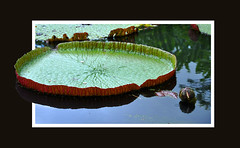
Framed Lily Pad - Mauritius


Framed Lily Pad - Mauritius
Originally uploaded by Leone Fabre.

Most pictures that identify the Botanical Gardens in Mauritius, have the huge water lily lake where you can see the Victoria water lilies. It really is quite beautiful to stand in front of this lake and see them on top of the water.

The garden known as the Sir Seewoosagur Ramgoolam Botanical Gardens has a large variety of palms, flowers and plants.

It was in the past during the French colonisation the private garden of the French Governor, Mahe de Labournnais. These giant water lilies are known in their scientific name as Victoria amazonica.

The famous water lily is native to the Amazon River. Formerly the Victoria amazonica was known as the Victoria regia. It has been named after the Queen Victoria. The leaves can be a diameter and up to three meters. The flowers of the giant lilies are magnificent.

Tuesday, 15 September 2009

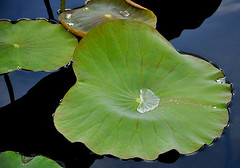
a superhydrophobic surface !


a superhydrophobic surface !
Originally uploaded by Leone Fabre.

The Lotus effect refers to the very high water repellency (superhydrophobicity) exhibited by the leaves of the lotus flower (Nelumbo). Dirt particles are picked up by water droplets due to a complex micro- and nanoscopic architecture of the surface which enables minimization of adhesion.

read more here:

en.wikipedia.org/wiki/Lotus_effect

photo taken in the Botanical Gardens, Mauritius.

Sunday, 13 September 2009

the 'long awaited' Monkey Tale ......


This morning - at Batam - I was opening the lounge windows and looked across to our neighbour's villa and saw five monkey's on their balcony. Mamma, Pappa and the three baby's. At this point I did not realise they were in fact "the three wise monkeys".

I saw them run into R's kitchen and started making a bit of a racket ....... but assumed that he was at home and would deal with them. Then they started walking along the pathway and coming down to our garden, again I was not that concerned as they don't bother us. Except mamma monkey spotted the pineapples I have growing and called the whole family!

That's when I got cross.

I yelled at them to no avail.

John went out and off they ran...... up into the tree's, waiting. Five minutes later they sneak back down and started pulling at the pineapples so I know there won't be any left by the time I go back next weekend.

You can see here in the following image where they have taken the top out of the pineapple:


We started out on our walk, but only went a short distance when I asked John to run back and get a bottle of water to take with us.

Just as well he did, as he opened the front door he saw the monkeys on our balcony and in our kitchen. We never leave food out and it was not an issue really, so he shooed them out. By the time he walked up the pathway and looked back to the kitchen, there they were sitting on the kitchen bench eating one of my Energy Bar's!

Now they were IN a sealed contained with a lid and of course also in their own packaging. But these cheeky monkeys managed to open the tupperware lid and get to the bar's. But the cheeky way they were pointedly showing John that they were eating in our kitchen was amazing.

At least they did not do any 'damage'.... John spoke with our neighbor who told him that when the monkeys were in his kitchen they undid the lid on the bottle of oil and drank from it .... then obviously did not like the taste so threw it on the floor!!!

When the population of monkeys become too great in the village, the office set traps to collect them and set them free back in to the jungle area's....... the traps are about one metre diameter and a trap door at one end. At the other end they tie a banana on string to entice them into the trap.... BUT....

they climb up on top, put their hands down by the string and gradually haul the banana back up to the edge of the wire, pull it through and proceed to eat it.


cheeky?

or just plain clever?

Thursday, 10 September 2009

wandering around the old parts of Port Louis.....


Port Louis was founded by the French around 1735 as a revictualling halt for their ships travelling around the Cape of Good Hope, and was built by skilled Tamilian craftsmen from India around 1728. The Port is named in honour of King Louis XV. The first Governor was Count Bertrand-François Mahé de La Bourdonnais.

Port Louis has conserved many historic and colonial buildings through the years. One of them is a fortification named Fort Adelaide or La Citadelle, built by the British in 1835. The latter dominates the city. From there, one can observe most of the city's architecture. Port Louis is surrounded by a mountain range, called the Port Louis Moka Range. Among its most famous mountains are Le Pouce and Pieter Both which stand about 800 metres from sea level. One of the most popular attractions is the country's national derby called Champ de Mars, which is the oldest race course (1812) in the Indian Ocean and the second oldest in the southern Hemisphere. Other famous destinations include the Police Barracks known as Les Casernes and the Port Louis Waterfront.


Port Louis was used only during summer (due to prevailing winds) by the Dutch and the French since the 1600's, and early 1700's. However, it took all its importance when, in 1735 Labourdonnais decided to make Port Louis the main harbour and the administration headquarters of Mauritius.
Labourdonnais had the city plan made, ordered the erection of buildings hosting services that were essential to the colony… and to the good profits of the "Compagnie des Indes." Among these infrastructures were the government and military headquarters, aqueducts, hospitals, schools, granaries, boat repairs, a printing office, a foundry, and… a powder mill. Some of these works, especially the canals for wastewaters that run across the streets, can still be seen today.


Port Louis is the capital of Mauritius and received in 1964, the status of city. Port Louis has a residential population of above 150,000 but receives as much visitors during daytime as it is first of all the city of businesses.

It has been frequently hypothesized that Mauritius was first discovered by the Arabs, who named the island Dina Harobi. The first historical evidence of the existence of an island now known as Mauritius is on a map produced by the Italian cartographer Alberto Cantino in 1502. Cantino shows three islands which are thought to represent the Mascarenes (Reunion, Mauritius and Rodrigues) and calls them Dina Margabin, Dina Harobi and Dina Morare. What is known is that the medieval Arab world called the Indian Ocean island region Waqwaq.


[ The Markets of Port Louis is saved for the next posting on the blog ! ]

Tuesday, 8 September 2009

the "ways" of Mauritius .....

A road is an identifiable route, way or path between places. Roads are typically smoothed, paved, or otherwise prepared to allow easy travel; though they need not be, and historically many roads were simply recognizable routes without any formal construction or maintenance.


These images are just a few examples of the many laneways, roadways, highways and carriageways throughout Mauritius.


Major Street or Major Road
An arterial highway with intersections at grade and direct access to abutting property, and on which geometric design and traffic control measures are used to expedite the safe movement of through traffic.

Separated Roadways
A highway with opposing directions of travel having independent alignment and gradient.

Roadway
The portion of the highway, including shoulders, for vehicular use.

Highway
A general term denoting a public way for purposes of vehicular travel, including the entire area within the right - of - way lines. Recommended usage in urban areas, highway or street; in rural areas, highway or road.

Arterial Highway
A general term denoting a highway primarily for through traffic, usually a continuous route.

Deceleration Lane
An auxiliary lane including tapered areas, primarily for the deceleration of vehicles leaving the through traffic lanes.

Cul-de-Sac
A local street or road open at only one end with special provisions for turning around.

Dead-End Road
A local street or road open only at one end without special provisions for turning around.


When wandering around on foot you start to see so much of these local areas.... taking a walk up a lane will show you a different aspect to the way the locals live. It may not be how you and I live ... but this is what it is like..... keep an open mind and you will learn so much of the local culture and their way of life - in any country!


Divided Highway

A highway, street or road with opposing directions of travel separated by a median.

Expressway
A divided multi-lane arterial highway for through traffic with full or partial control of access and generally with grade separations at major intersections. On rare occasions expressways may also include two lane roadways.

Freeway
An expressway with full control of access and grade separations at all intersections.


Traffic Lane

The portion of the roadway for the movement of a single line of vehicles.


A roundabout is one of several types of circular road junctions or intersections at which traffic is slowed down and enters a one-way stream around a central island. Technically these junctions sometimes are called modern roundabouts, in order to emphasize the distinction from older circular junction types which had different design characteristics and rules of operation. In the United States those older designs commonly are referred to as "rotaries" or "traffic circles".


Highway
A general term denoting a public way for purposes of vehicular travel, including the entire area within the right - of - way lines. Recommended usage in urban areas, highway or street; in rural areas, highway or road.


it was great fun to explore the many roads of Mauritius in a local bus, on foot or in a cab.....

(stay tuned for more on Mauritius!)